BinghamtonConcrete Co
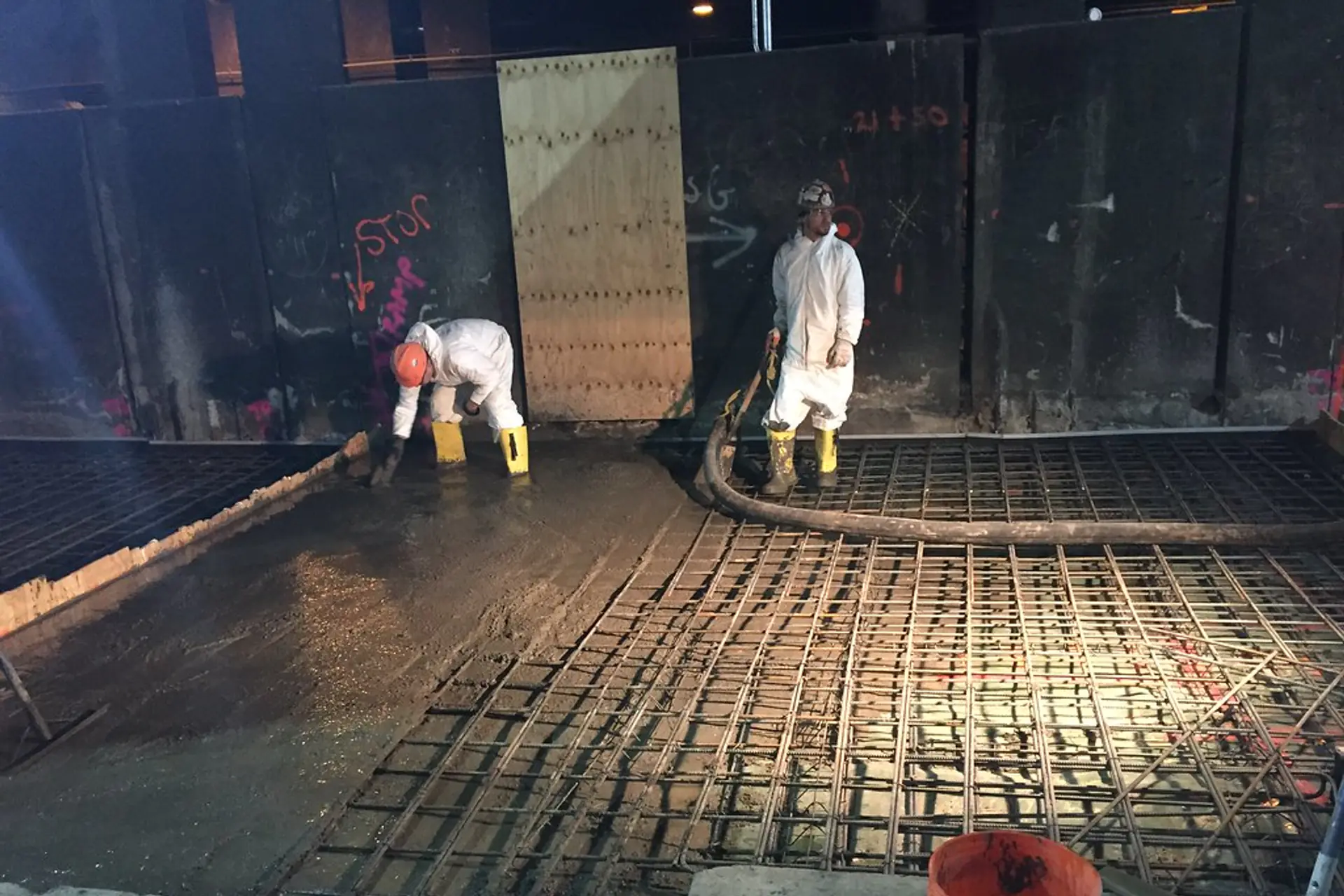
Reinforcing steel detail inside a precast concrete unit at the Binghamton Concrete Co plant

Technical library

Precast Resources

Specifications, permitting requirements and installation guidance for precast concrete in upstate New York — written by the people who cast it, not copied from a national brochure.

Installation & Specification Guides

Bedding and backfill for precast structures

A precast unit is only as good as what it sits on. Place a minimum 6-inch compacted bedding course of clean crushed stone (NYSDOT Section 703 No. 1 or No. 2), level it, and never bed directly on disturbed native soil. Backfill in 8- to 12-inch lifts compacted evenly on all sides — uneven backfill is the single most common cause of a racked, leaking joint.

Frost depth in the Southern Tier

Broome and Tioga Counties both use a 42-inch design frost depth. Any bearing surface — a footing, a bedding course, or the bottom of a wall stem — must sit at or below that line. Structures founded above the frost line heave in winter and settle in spring, which opens joints and cracks corners within a few seasons.

What goes in a submittal package

A complete package includes P.E.-stamped shop drawings showing dimensions, reinforcement, openings and lifting points; the concrete mix design with strength and air content; joint sealant product data; and the plant certification. We assemble all of it in the format the reviewing office expects, which usually turns a two-month review into a two-week one.

Watertight vs. non-watertight structures

Watertightness is a specification, not an assumption. If a structure must be watertight — a septic tank, a pump station, a vault below the water table — say so at quote stage. Those units get a profiled joint with butyl mastic sealant to ASTM C990 and are vacuum or hydrostatically tested to ASTM C1227 before shipment.

Buoyancy and high water tables

An empty buried tank in saturated ground will float. Where groundwater or flood elevation is at or above the structure, the design has to check uplift against the unit weight plus any anti-flotation collar and soil overburden. This matters throughout the river flats in Johnson City, Owego and the Binghamton First Ward.

De-icing salt and concrete durability

Chloride exposure from road salt is the dominant durability threat on any structure within splash range of a Southern Tier roadway. The defences are air entrainment (5–8%), adequate cover over the steel, a low water-cement ratio and — where specified — epoxy-coated reinforcement.

Technical Questions

How deep is the frost line in Broome County, NY?

Broome County uses a 42-inch design frost depth, and Tioga County is the same. Footings, bedding courses and the base of any retaining wall stem should be founded at or below 42 inches. The region runs roughly 50 freeze-thaw cycles a year, so a structure founded above the frost line will heave.

Do I need a permit to install a precast structure in New York?

Usually. Structural work, drainage structures and retaining walls over four feet in height are reviewed by the local building department under the 2020 Building Code of New York State. On-site wastewater structures also require county health department approval. We supply the stamped drawings and product data for the submittal; the application itself is filed by the owner or contractor of record.

What concrete strength do you use for precast products?

Our baseline is 4,000 PSI at 28 days with 5–8% entrained air, and we go to 5,000 or 6,000 PSI where the specification or the application calls for it. Every pour is slump- and air-tested, and cylinder-break results are documented and provided with the order.

How much does precast concrete weigh?

Normal-weight structural concrete runs about 150 pounds per cubic foot, or roughly 4,050 pounds per cubic yard. Every unit we ship comes with a documented pick weight and rigging points on the shop drawing so the crane can be sized correctly before it arrives.

Can precast concrete be installed in winter?

Yes, and that is one of its main advantages in this climate. Because the units are cast and cured indoors, winter installation is limited only by whether the excavation can be kept free of frost and the bedding properly placed — not by whether concrete can be poured in the weather.

Local Permitting By Community

Code review, frost depth and site conditions differ by municipality. Each service-area page lists the reviewing office and the local design factors we work to.

Need a spec reviewed before you bid?

Send the section and we will tell you what it means for the units, the lead time and the price. No charge, no obligation.

  • Licensed & Insured
  • NPCA Quality Certified Plant
  • NYSDOT Approved Producer
  • Satisfaction Guarantee
Call (607) 258-6927Free Quote